Die Architektur eines Computers in einem Telefon: Der A7 verdient die Bezeichnung „Desktop-class“
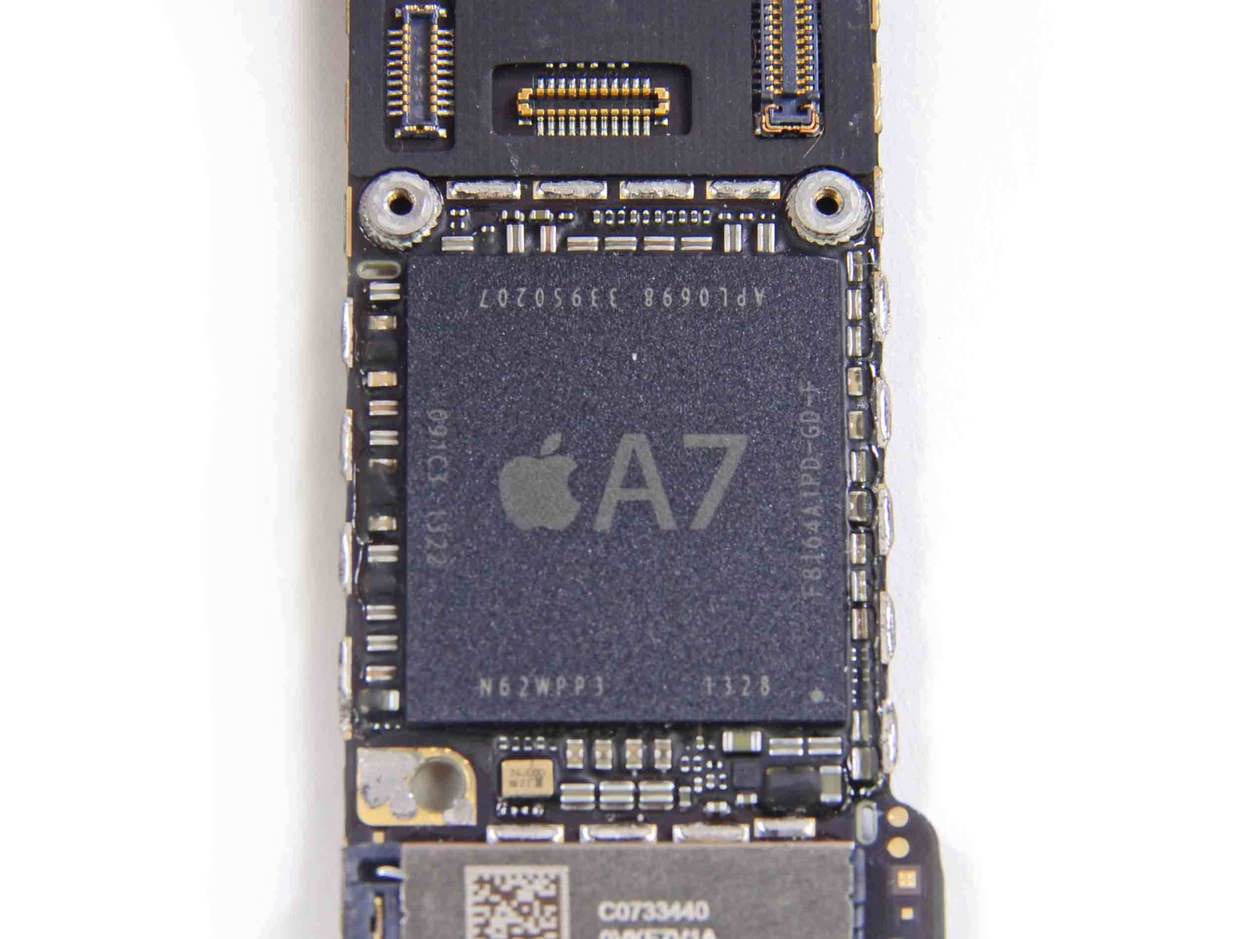 iFixit
Als ‚Tick-Tock‘-Modell bezeichnet Intel seinen Rhythmus, in dem sie ihre Chip-Architektur erneuern (Tock) und im nächsten Zyklus verkleinern (Tick). Mit dem A6- (Swift) und dem A7-Prozessor (Cyclone) im iPhone und iPad hat Apple in zwei aufeinanderfolgenden Jahren jeweils eine runderneuerte Prozessorarchitektur (Tock) - ohne Strukturverkleinerung (Tick) - eingeführt.
iFixit
Als ‚Tick-Tock‘-Modell bezeichnet Intel seinen Rhythmus, in dem sie ihre Chip-Architektur erneuern (Tock) und im nächsten Zyklus verkleinern (Tick). Mit dem A6- (Swift) und dem A7-Prozessor (Cyclone) im iPhone und iPad hat Apple in zwei aufeinanderfolgenden Jahren jeweils eine runderneuerte Prozessorarchitektur (Tock) - ohne Strukturverkleinerung (Tick) - eingeführt.
With six decoders and nine ports to execution units, Cyclone is big. As I mentioned before, it's bigger than anything else that goes in a phone. Apple didn't build a Krait/Silvermont competitor, it built something much closer to Intel's big cores. At the launch of the iPhone 5s, Apple referred to the A7 as being "desktop class" - it turns out that wasn't an exaggeration. [...] Looking at Cyclone makes one thing very clear: the rest of the players in the ultra mobile CPU space didn't aim high enough. I wonder what happens next round. Anand Lal Shimpi | AnandTech
Dieser Inhalt ist nur für Gold-Mitglieder verfügbar. Jetzt abonnieren!